
Type 2 Diabetes with Weight Loss in Adults: Complete Health Guide
Walk through neighbourhoods in Houston, Chicago, Los Angeles, or Atlanta, and statistically, one in ten adults you pass may be living with type 2 diabetes. According to the Centers for Disease Control and Prevention (CDC), more than 37 million Americans have diabetes, with the vast majority diagnosed with type 2.
It remains the seventh leading cause of death in the United States and places an economic burden of over $327 billion annually on the healthcare system. However, there is a critical message that deserves more attention: type 2 diabetes is not necessarily a permanent decline in health.
With evidence-based lifestyle modification—particularly structured weight reduction—many individuals significantly improve glycaemic control, reduce medication dependence, and in some cases achieve remission. From newly diagnosed patients in Dallas to long-term cases in New York City, sustainable weight management can fundamentally alter the trajectory of this metabolic disorder.
In this comprehensive guide, we will examine the pathophysiology of type 2 diabetes, early and progressive symptoms, the mechanistic link between excess adiposity and insulin resistance, and clinically supported dietary strategies for weight reduction.
We will also discuss modern pharmacologic options, including Ozempic medication treat type 2 diabetes with weight reduction as part of an integrated treatment plan. Across the United States, patients are combining medical therapy, nutrition science, and behavioural change to regain metabolic control—often one pound at a time.
What Is Type 2 Diabetes? Understanding the Basics
So, type 2 diabetes is what exactly?
In simple terms, it is a chronic metabolic condition where your body either does not produce enough insulin or does not use insulin effectively — a problem called insulin resistance. Insulin is a hormone made by the pancreas that acts like a key, unlocking your cells so they can absorb glucose (sugar) from your blood for energy.
When that system breaks down, sugar builds up in your bloodstream instead of entering your cells. Over time, consistently elevated blood sugar — also known as hyperglycemia — damages nerves, blood vessels, kidneys, eyes, and heart tissue. That is why uncontrolled type 2 diabetes can lead to serious, life-altering complications.
| Key Fact Type 2 diabetes accounts for 90-95% of all diabetes cases in the United States. Unlike type 1 diabetes, it develops gradually and is heavily influenced by lifestyle factors such as body weight, physical activity, and diet. |
Who Is Most at Risk?
Certain populations face higher risks. African Americans in cities like Detroit and Baltimore, Hispanic Americans in Miami and San Antonio, and Native Americans in rural communities across the Southwest show significantly higher rates of type 2 diabetes. Risk factors include being overweight or obese, being physically inactive, having a family history of diabetes, being over age 45, and having prediabetes or a history of gestational diabetes.
Type 2 Diabetes Symptoms: What Your Body Is Telling You
One of the most dangerous things about type 2 diabetes is that it often develops quietly. Many people in cities like Phoenix, Denver, and Philadelphia walk around for years not knowing they have it. Recognizing the early signs can make an enormous difference in long-term outcomes.
Common Type 2 Diabetes Symptoms Include:
- Frequent urination, especially at night
- Excessive thirst that never seems to go away
- Unexplained fatigue and low energy levels
- Blurred vision
- Slow-healing wounds or frequent infections
- Tingling, numbness, or pain in hands and feet
- Patches of darkened skin, especially around the neck or armpits (acanthosis nigricans)
- Increased hunger even after eating
Type 2 Diabetes Unexplained Weight Loss: A Warning Sign
While weight gain is commonly associated with type 2 diabetes, type 2 diabetes unexplained weight loss is a symptom that many patients and even some healthcare providers overlook. When your cells cannot absorb glucose for energy, your body breaks down fat and muscle tissue instead — leading to sudden, unintentional weight loss.
If you or someone you know in cities like Seattle, Boston, or Minneapolis is experiencing rapid, unexplained weight loss alongside increased thirst and urination, it is critical to get blood sugar levels checked immediately. This combination can indicate that blood sugar is severely uncontrolled and requires prompt medical attention.
Type 2 Diabetes Treatments: A Full Spectrum of Options
The landscape of type 2 diabetes treatments has expanded dramatically in recent years. Gone are the days when the only options were a bland diet and metformin. Today, Americans have access to a wide range of medications, lifestyle therapies, and medical procedures that can effectively manage — and in some cases reverse — the condition.
Lifestyle-Based Treatments
For many newly diagnosed patients, especially those who are overweight, lifestyle interventions are the first line of defense. These include medical nutrition therapy (MNT) guided by a registered dietitian, structured exercise programs, behavioral therapy for weight management, and continuous glucose monitoring (CGM) devices that give real-time feedback on how food and activity affect blood sugar.
Oral Medications
Metformin remains the gold standard first-line oral medication for type 2 diabetes. It works by reducing glucose production in the liver and improving insulin sensitivity. Other oral options include SGLT-2 inhibitors (like empagliflozin and dapagliflozin), which cause the kidneys to excrete excess glucose in urine, and DPP-4 inhibitors, which help the body release more insulin after meals.
Injectable Medications and the Rise of GLP-1 Agonists
Among the most revolutionary developments in diabetes treatment is the class of drugs known as glucagon-like peptide-1 (GLP-1) receptor agonists. These medications mimic a naturally occurring hormone in your gut that stimulates insulin release, suppresses glucagon (a blood sugar-raising hormone), slows stomach emptying, and — critically — reduces appetite and promotes weight loss.
| What is Ozempic (Semaglutide)? Ozempic medication (semaglutide) is an FDA-approved, weekly injectable prescription medication for adults with type 2 diabetes. It is used to improve glycemic control and reduce cardiovascular risk in patients who already have heart disease. As a glucagon-like peptide-1 (GLP-1) receptor agonist, Ozempic works by mimicking the hormone GLP-1 to regulate blood sugar, slow digestion, and reduce appetite. It is injected once a week using a pre-filled pen and has become widely prescribed across major U.S. cities due to its dual benefits of blood sugar control and meaningful weight loss. |
It is important to note that Ozempic is specifically approved for type 2 diabetes management. Its active compound, semaglutide, is also available in a higher-dose form called Wegovy, which is FDA-approved specifically for chronic weight management in adults with obesity. If you are in a city like Nashville, Portland, or San Diego and considering this medication, speak with your endocrinologist or primary care physician about whether it is appropriate for your specific situation.
Bariatric Surgery
For individuals with a BMI over 35 who have not achieved adequate blood sugar control through other means, bariatric surgery (such as gastric bypass or sleeve gastrectomy) is a highly effective treatment option. Studies show that more than 50% of people who undergo bariatric surgery achieve remission of type 2 diabetes — often within days of the procedure, even before significant weight loss occurs.
Type 2 Diabetes Weight Loss: Why It Matters More Than You Think
If there is one intervention that has the most powerful impact on type 2 diabetes management, it is weight loss. The relationship between body fat — particularly visceral fat stored around the abdomen and liver — and insulin resistance is profound and well-documented.
Research shows that losing just 5% to 10% of your body weight can significantly lower fasting blood sugar, reduce HbA1c levels, decrease blood pressure, lower triglycerides, and in many cases reduce or eliminate the need for diabetes medications. For a 200-pound person in cities like Cleveland, Charlotte, or Kansas City, that means losing as little as 10 to 20 pounds could meaningfully transform their metabolic health.
Controlling Type 2 Diabetes with Weight Loss
Controlling type 2 diabetes with weight loss works through several powerful mechanisms. First, as you lose body fat, particularly from the liver and pancreas, insulin sensitivity improves. Your cells become more responsive to the insulin your body produces. Second, reduced caloric intake lowers blood sugar spikes after meals. Third, exercise — which is a key component of most weight loss programs — independently improves glucose uptake by muscles, even without insulin.
Can You Reverse Type 2 Diabetes with Weight Loss?
This is one of the most common and important questions people ask: can you reverse type 2 diabetes with weight loss? The short, science-backed answer is — yes, for many people, especially those who have not had the condition for many years.
The word “reversal” or “remission” in the medical world means that blood sugar levels return to below the diabetic threshold and stay there without the use of diabetes medications. This is different from a cure — people who have achieved remission still need to maintain their healthy habits to keep blood sugar in a normal range.
Who Is Most Likely to Reverse Type 2 Diabetes with Weight Loss?
- People who have had type 2 diabetes for less than 6 years
- Those who achieve substantial weight loss (15% or more of body weight)
- Individuals who were not dependent on insulin before losing weight
- Younger patients whose pancreatic beta-cell function is better preserved
- People who commit to long-term lifestyle changes, not just short-term diets
From the health clinics of Austin, Texas to the wellness centers of Portland, Oregon, thousands of Americans each year are achieving diabetes remission through structured low-calorie diets, very low-carbohydrate diets, and surgical interventions. The key is working closely with a healthcare team to do it safely and sustainably.
Weight Reduction Foods: What to Eat for Blood Sugar Control
Nutrition is the cornerstone of both weight loss and blood sugar management. But with so much contradictory information online, many Americans feel confused about what to eat. Here is what the evidence actually supports when it comes to weight reduction foods for people with type 2 diabetes.
Best Foods to Eat
Non-Starchy Vegetables
Leafy greens like spinach, kale, and arugula; cruciferous vegetables like broccoli, cauliflower, and Brussels sprouts; and other low-carb vegetables like zucchini, bell peppers, and cucumbers are nutritional powerhouses. They are low in calories, high in fiber, and have minimal impact on blood sugar. Fill half your plate with these at every meal.
Lean Proteins
Chicken breast, turkey, fish (especially fatty fish like salmon, mackerel, and sardines rich in omega-3s), eggs, and plant-based proteins like tofu and legumes are excellent choices. Protein helps you feel full longer, preserves muscle mass during weight loss, and has little effect on blood sugar when consumed in reasonable portions.
Healthy Fats
Avocados, olive oil, nuts (almonds, walnuts, pistachios), and seeds (chia, flaxseed) provide healthy monounsaturated and polyunsaturated fats that support heart health — crucial for diabetics, who face elevated cardiovascular risk. These fats also slow glucose absorption and improve satiety.
Low-Glycemic Whole Grains
Oats, quinoa, barley, and brown rice raise blood sugar more slowly than refined grains. When portioned correctly, they provide sustained energy without dramatic glucose spikes. The fiber content also feeds beneficial gut bacteria, which plays an emerging role in metabolic health.
Foods to Limit or Avoid
- Sugary beverages: sodas, fruit juices, sweet teas, energy drinks
- Refined carbohydrates: white bread, white rice, pasta made from refined flour
- Processed and ultra-processed snack foods: chips, crackers, cookies
- Fried foods and trans fats
- Alcohol, especially beer and sweet cocktails
- Sweetened dairy: flavored yogurts, ice cream, sweetened coffee drinks
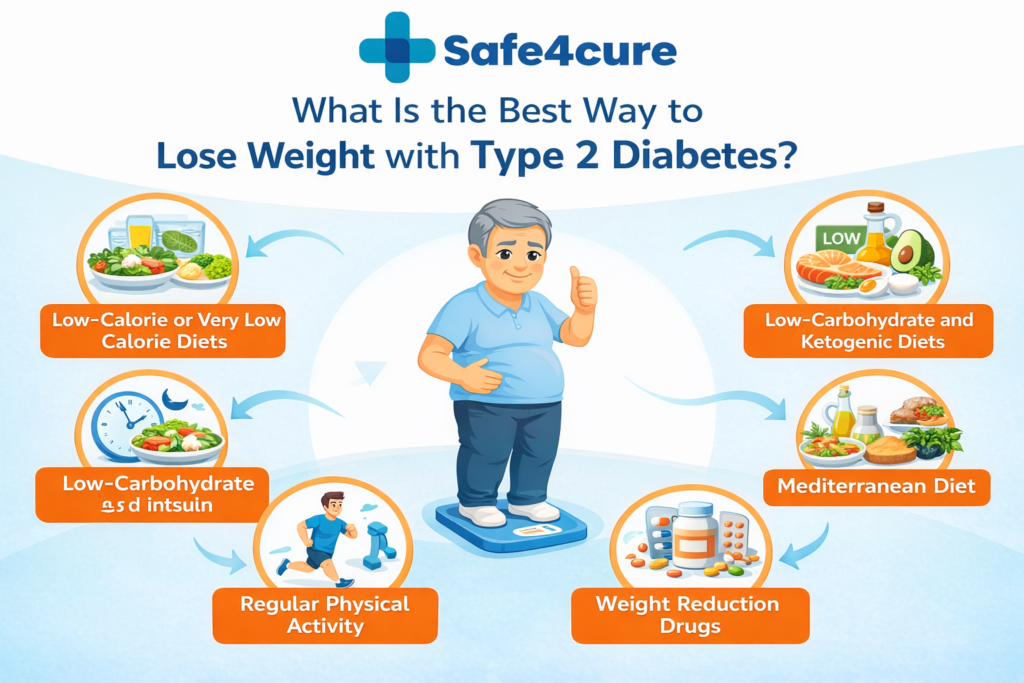
What Is the Best Way to Lose Weight with Type 2 Diabetes?
People ask all the time: what is the best way to lose weight when you have type 2 diabetes? There is no single universal answer, because the best approach is the one you can actually stick to long-term. However, research points to several strategies that consistently deliver results for people managing type 2 diabetes.
1. Low-Calorie or Very Low-Calorie Diets
Eating 800 to 1,200 calories per day under medical supervision has been shown to produce rapid weight loss and dramatic improvements in blood sugar control. The DiRECT trial used an 825 to 853 calorie daily total diet for 12 weeks, followed by gradual food reintroduction. This approach requires close medical monitoring, especially for people on diabetes medications that can cause low blood sugar.
2. Low-Carbohydrate and Ketogenic Diets
Restricting carbohydrate intake to under 130 grams per day (low-carb) or under 50 grams per day (ketogenic) is highly effective for blood sugar control and weight loss. By dramatically reducing the glucose load from food, these diets can lower post-meal blood sugar spikes, reduce HbA1c, and decrease the need for medication — sometimes rapidly. Many endocrinologists and diabetes educators across cities like Denver, Salt Lake City, and Raleigh now incorporate low-carb approaches as a legitimate first-line option.
3. Mediterranean Diet
The Mediterranean diet — rich in vegetables, legumes, fish, olive oil, and moderate wine — consistently shows benefits for both blood sugar control and cardiovascular health in people with type 2 diabetes. It is also highly sustainable long-term, making it one of the most recommended approaches by U.S. dietitians.
4. Intermittent Fasting
Time-restricted eating — such as eating only within an 8-hour window (16:8 fasting) — is gaining traction as a practical weight management strategy for people with type 2 diabetes. Research suggests it can reduce calorie intake naturally, improve insulin sensitivity, and promote fat burning. However, it must be approached carefully by anyone taking insulin or sulfonylureas to avoid hypoglycemia.
5. Regular Physical Activity
Exercise is a non-negotiable component of any effective diabetes weight loss program. A combination of aerobic exercise (walking, swimming, cycling) and resistance training (weights, resistance bands) produces the best outcomes. The American Diabetes Association recommends at least 150 minutes of moderate-intensity aerobic exercise per week, plus 2 to 3 sessions of resistance training.
6. Weight Reduction Drugs
When lifestyle changes alone are not sufficient, weight reduction drugs can play an important role. In addition to GLP-1 receptor agonists like semaglutide (Ozempic), other FDA-approved weight reduction drug options include phentermine-topiramate (Qsymia), naltrexone-bupropion (Contrave), and orlistat (Xenical/Alli). These medications work through different mechanisms but all require a prescription and should be used as part of a comprehensive weight management program — not as standalone solutions.
Ozempic and GLP-1 Medications: A Deep Dive for American Patients
The conversation around Ozempic medication has exploded across the United States over the past few years. From primary care offices in Atlanta to endocrinology clinics in San Jose, this weekly injectable has become one of the most talked-about diabetes and weight management drugs in the country. Here is what you need to know.
How Does Ozempic Work?
As a glucagon-like peptide-1 (GLP-1) receptor agonist, Ozempic works by mimicking the GLP-1 hormone that is naturally released from your gut after you eat. It binds to GLP-1 receptors in the pancreas, brain, and digestive tract, triggering several beneficial effects: it stimulates the pancreas to release insulin when blood sugar is high, suppresses glucagon secretion (which would otherwise raise blood sugar), slows gastric emptying so food is absorbed more gradually, and signals the brain to reduce appetite and food intake.
Who Is a Candidate for Ozempic?
Ozempic is FDA-approved for adults with type 2 diabetes who need better glycemic control or who have established cardiovascular disease and need to reduce the risk of major cardiovascular events such as heart attack or stroke. It is not approved for type 1 diabetes. Patients with a history of medullary thyroid carcinoma or Multiple Endocrine Neoplasia syndrome type 2 should not take semaglutide products.
Common Side Effects
The most frequently reported side effects of Ozempic include nausea, vomiting, diarrhea, constipation, and abdominal discomfort. These are typically most pronounced when starting the medication or increasing the dose, and tend to improve over several weeks. Starting with a low dose (0.25 mg weekly for 4 weeks) and gradually titrating up helps most patients minimize GI side effects.
| Important Notice Ozempic should only be used under the supervision of a licensed healthcare provider. Due to high demand driven by its weight loss benefits, supply shortages have occurred across the U.S. Always obtain this medication through a legitimate, licensed pharmacy with a valid prescription from your doctor. |
Ozempic vs. Other GLP-1 Options
Semaglutide is also available as Rybelsus (oral tablet, daily dosing) and Wegovy (higher-dose weekly injection for obesity). Other GLP-1 receptor agonists on the U.S. market include liraglutide (Victoza for diabetes, Saxenda for obesity), dulaglutide (Trulicity), and the newer tirzepatide (Mounjaro for diabetes, Zepbound for obesity), which acts on both GLP-1 and GIP receptors for even greater blood sugar and weight effects.
Real Talk: What Diabetes Management Looks Like Across American Cities
Managing type 2 diabetes is not the same experience for every American. Geography, income, healthcare access, and cultural food traditions all play a role. Here is a glimpse at how the conversation around diabetes management looks in different parts of the country.
Southern States: Houston and Atlanta
The American South has some of the highest rates of type 2 diabetes in the country, partly driven by cultural food traditions high in fried foods, white rice, and sugary sweet tea. In Houston, Texas — one of the most diverse cities in America — community health centers are increasingly offering culturally tailored diabetes education in Spanish, Vietnamese, and other languages. In Atlanta, Georgia, the CDC’s headquarters city, community programs connect residents in underserved neighborhoods with lifestyle coaches and free nutrition counseling.
Midwest: Chicago and Detroit
In Chicago and Detroit, food desert conditions in many lower-income neighborhoods make access to fresh produce and quality proteins a genuine barrier. Urban farming initiatives and SNAP benefit programs that offer bonuses for purchasing fruits and vegetables at farmers’ markets are making slow but meaningful inroads. Diabetes awareness campaigns in these cities are increasingly targeting younger adults, as type 2 diabetes diagnoses in people under 45 have been rising.
West Coast: Los Angeles and Seattle
In Los Angeles and Seattle, the wellness culture and higher income levels in many areas have made low-carb diets, gym memberships, and wearable continuous glucose monitors more accessible. Telehealth services for diabetes management have exploded in both cities, allowing patients to work with dietitians, endocrinologists, and health coaches from their homes — a development that has particularly benefited working parents and people with mobility challenges.
Northeast: New York City and Boston
In New York City, the largest city in the United States, the sheer diversity of the population means diabetes management must account for Puerto Rican, Dominican, South Asian, Chinese, and African American food traditions, among many others. Boston’s world-class hospital systems — including Massachusetts General Hospital and Brigham and Women’s — are at the forefront of diabetes research, offering patients access to clinical trials for the newest medications and technologies.
Building Your Diabetes Reversal and Management Plan
Whether your goal is reversing type 2 diabetes with weight loss or simply better controlling your blood sugar through lifestyle changes, a structured, personalized plan is essential. Here is a practical framework used by diabetes educators across the United States.
Step 1: Get Comprehensive Lab Work
Before changing anything, know your numbers. Your healthcare provider should check your HbA1c (3-month average blood sugar), fasting glucose, lipid panel, kidney function (eGFR and urine albumin-to-creatinine ratio), liver function, and thyroid function. These baseline numbers will help you measure your progress and ensure that any dietary or medication changes are monitored safely.
Step 2: Set a Weight Loss Goal
Work with your doctor or dietitian to set a realistic weight loss goal. For most people with type 2 diabetes, losing 5% to 15% of body weight represents a clinically meaningful target that can significantly improve blood sugar control. For those pursuing remission, 15% or more may be the target, but this should always be done under medical supervision.
Step 3: Choose Your Dietary Approach
There is no single perfect diet for everyone with type 2 diabetes. Low-carb, Mediterranean, DASH, plant-based, and portion-controlled diets have all shown benefit. The best diet is the one that keeps your blood sugar stable, promotes weight loss, and that you can actually sustain. A registered dietitian who specializes in diabetes can be invaluable in helping you find your best fit.
Step 4: Move Your Body Every Day
Even 10-minute walks after meals can meaningfully lower post-meal blood sugar spikes. As your fitness improves, aim for the recommended 150 minutes of moderate aerobic activity per week plus resistance training twice weekly. If you are in a cold-weather city like Minneapolis or Denver in winter, consider indoor options like resistance bands at home, mall walking, or community center pools.
Step 5: Monitor and Adjust
Track your blood sugar regularly, whether through self-monitoring with a glucometer or using a continuous glucose monitor (CGM). Devices like the Dexterity G7 and FreeStyle Libre provide real-time glucose data that helps you understand exactly how specific foods, activities, stress, and sleep affect your levels. Review your numbers with your healthcare team at least every 3 months.
Step 6: the Mental and Emotional Side
Diabetes burnout is real. Managing a chronic condition is exhausting, and the psychological burden of constant monitoring, medication management, and dietary vigilance takes a toll. Many diabetes programs now include behavioral health components, and therapists who specialize in chronic illness management are increasingly available through telehealth platforms. Do not underestimate the importance of mental health support in your diabetes journey.
FAQs
Q: Can you actually reverse type 2 diabetes with weight loss alone?
A: Yes, for many people — particularly those diagnosed within the last 5 to 6 years and who achieve 15% or more weight loss — blood sugar levels can return to the normal range without medication. This is called remission, not a cure, because maintaining the remission requires ongoing lifestyle commitment. The more weight lost and the more recently you were diagnosed, the higher the likelihood of achieving remission.
Q: What is the difference between reversing type 2 diabetes and controlling type 2 diabetes with weight loss?
A: Controlling type 2 diabetes with weight loss means that your blood sugar levels improve significantly — potentially to the point where medication doses are reduced — but they have not returned to a non-diabetic range without medication. Reversal or remission means blood sugar levels stay below the diabetic threshold without diabetes medications for at least 3 months. Both outcomes are enormously valuable for long-term health.
Q: Is Ozempic only for people who are obese?
A: No. Ozempic (semaglutide) is FDA-approved for adults with type 2 diabetes to improve blood sugar control and reduce cardiovascular risk, regardless of weight. However, one of its notable side effects is significant weight loss, which makes it particularly beneficial for overweight or obese patients with type 2 diabetes. Wegovy, a higher-dose version of semaglutide, is specifically approved for chronic weight management.
Q: How long does it take to see blood sugar improvements after starting a weight loss program?
A: Many people see measurable improvements in fasting blood sugar within the first 2 to 4 weeks of a low-calorie or low-carbohydrate diet, often before significant weight loss has occurred. The reduction in calories and carbohydrates directly lowers glucose levels. HbA1c — which reflects 3-month average blood sugar — typically shows improvement within 3 months of consistent lifestyle change.
Q: What is the best weight reduction food for people with type 2 diabetes?
A: There is no single magic food, but non-starchy vegetables are arguably the most powerful weight reduction foods for people with type 2 diabetes. They are very low in calories and carbohydrates, high in fiber and micronutrients, and can be eaten in large quantities without raising blood sugar. Pairing non-starchy vegetables with lean protein at every meal is a highly effective foundational strategy.
Q: Are low-carb diets safe for people on diabetes medications?
A: Low-carbohydrate diets can be highly effective for type 2 diabetes, but they must be carefully coordinated with your healthcare provider if you are taking insulin or medications that can cause low blood sugar (such as sulfonylureas). As carbohydrate intake drops and blood sugar improves, medication doses often need to be reduced quickly to avoid dangerous hypoglycemia. Always make dietary changes in consultation with your doctor or diabetes care team.
Q: Is type 2 diabetes unexplained weight loss the same as intentional weight loss for diabetes management?
A: No. Unexplained weight loss in type 2 diabetes is a symptom of uncontrolled high blood sugar, where the body breaks down fat and muscle for energy because glucose cannot enter cells properly. This is a medical warning sign. Intentional weight loss through diet, exercise, or medication is a therapeutic intervention that improves blood sugar control. If you are losing weight unexpectedly, see your doctor right away.
Q: Can children or teenagers develop type 2 diabetes?
A: Yes. Type 2 diabetes in youth has been increasing steadily in the United States, particularly among overweight adolescents. Cities like Houston, Los Angeles, and Chicago have seen rising rates of pediatric type 2 diabetes. Unlike in adults, type 2 diabetes in youth often progresses more rapidly and is harder to manage. Early intervention with lifestyle changes is especially critical in this population.
Q: How do I find a diabetes specialist in my city?
A: Your primary care physician can refer you to an endocrinologist who specializes in diabetes. You can also look for a Certified Diabetes Care and Education Specialist (CDCES) through the Association of Diabetes Care and Education Specialists (ADCES) website. Many hospitals in major cities also offer Diabetes Self-Management Education and Support (DSMES) programs, which are often covered by insurance including Medicare.