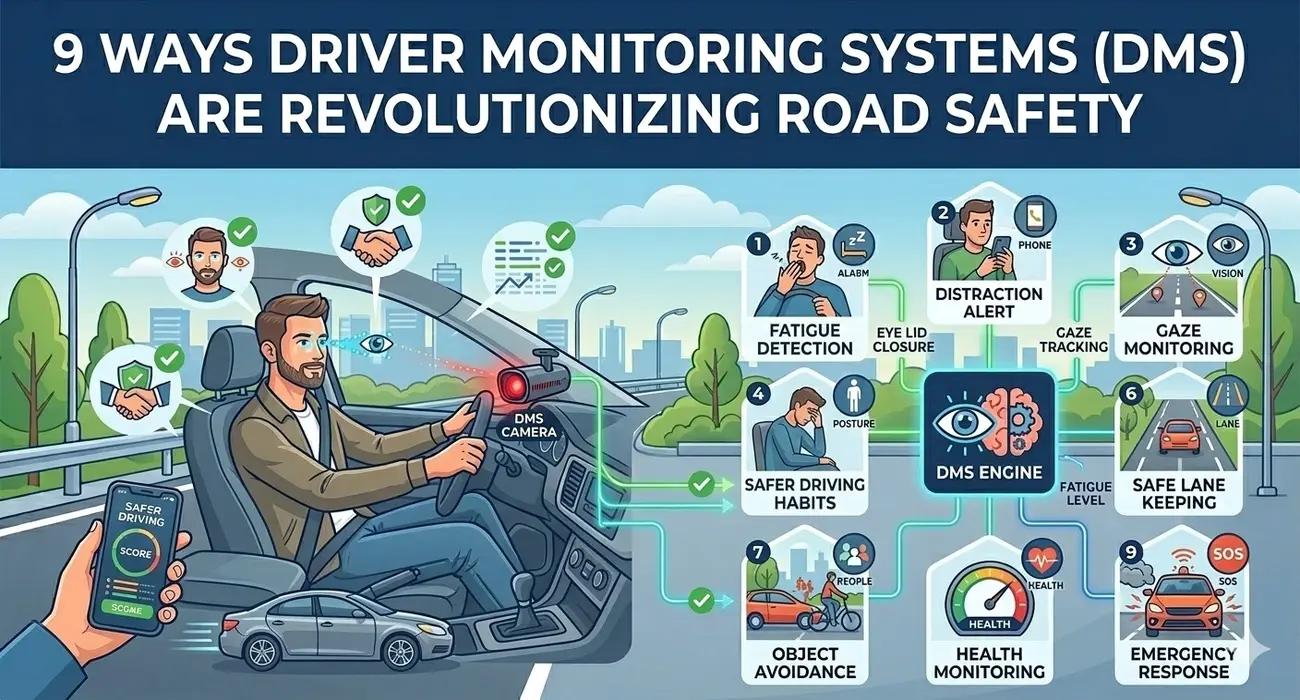
9 Ways Driver Monitoring Systems (DMS) Are Revolutionizing Road Safety
The automotive industry is witnessing a significant shift towards active safety technologies. Modern vehicles are no longer just machines that transport us; they are intelligent systems designed to protect occupants. Among these innovations, technology that observes the person behind the wheel is gaining rapid popularity.
As distractions inside the vehicle increase, manufacturers are focusing on driver behaviour. This has led to the development of sophisticated systems that ensure drivers remain alert. Driver monitoring systems road safety technology is becoming a standard feature in new cars to combat human error.
These systems serve as a silent co-pilot, constantly analysing the driver’s state. By detecting signs of drowsiness or distraction, they provide critical alerts that can prevent accidents. This technology is reshaping how we approach safety on the busy roads of the UAE.
What Driver Monitoring Systems (DMS) Actually Do
Driver Monitoring Systems (DMS) are advanced safety technologies integrated into the vehicle’s cabin. Their primary purpose is to assess the driver’s alertness and engagement in real-time. Unlike external sensors that watch the road, DMS focuses entirely on the person driving.
The goal is to reduce accidents caused by human factors. Fatigue and distraction are leading causes of collisions globally. By identifying these states early, the vehicle can intervene to ensure safety.
How Cameras and Sensors Track Driver Behaviour
Most DMS setups utilize infrared cameras mounted on the dashboard or steering column. These cameras track eye movement, blink rate, and head position. They function effectively even in low-light conditions or when the driver is wearing sunglasses.
sophisticated algorithms analyze this visual data to determine focus. If the driver’s eyes veer off the road for too long, the system registers distraction. Steering angle sensors also contribute data to assess control stability.
Why DMS Is Becoming Standard in Modern Vehicles
Global safety regulations are pushing for the mandatory inclusion of DMS. Organizations like Euro NCAP now include driver monitoring in their safety rating criteria. This regulatory pressure is accelerating adoption across all vehicle segments.
Car manufacturers also recognize the value of DMS in supporting autonomous driving features. For semi-autonomous systems to work safely, the car must know if the driver is ready to take back control. This makes DMS a cornerstone of future mobility.
How DMS Helps Reduce Accidents on Busy Roads
The impact of driver monitoring systems road safety technology is visible in accident prevention statistics. By addressing the root cause of many crashes—the driver—these systems offer a proactive safety layer. This is particularly relevant for high-speed highways and congested city streets.
Detecting Driver Fatigue Before It Becomes Dangerous
Fatigue is a silent killer on the roads, often creeping up on drivers during long commutes. DMS tracks yawning, eyelid closure, and head nodding. These are clear physical indicators of drowsiness that a driver might ignore.
When signs of fatigue are detected, the system issues a warning. This could be a visual alert on the dashboard or an audible chime. Early detection allows the driver to pull over and rest before a critical lapse in judgment occurs.
Preventing Distracted Driving in Urban Traffic
In cities like Dubai and Sharjah, traffic congestion can lead to wandering attention. Drivers may be tempted to check phones or adjust infotainment screens. DMS identifies when the driver’s gaze is not on the road ahead.
If the system detects prolonged inattention, it alerts the driver to refocus. This is vital in stop-and-go traffic where sudden braking by the car ahead is common. Keeping eyes on the road reduces rear-end collisions significantly.
9 Ways Driver Monitoring Systems Are Improving Road Safety
1. Detecting driver fatigue early
DMS constantly scans for microsleeps and heavy eyelids. By identifying fatigue in its initial stages, the system encourages breaks. This prevents the driver from falling asleep at the wheel during long journeys.
2. Identifying distracted driving behaviour
The system tracks eye gaze to ensure focus remains on the driving path. If a driver looks at a smartphone or passenger for too long, an alert is triggered. This immediate feedback corrects dangerous habits in real-time.
3. Encouraging safer driving habits
Knowing that the vehicle is monitoring attention often improves driver discipline. Drivers become more conscious of their behaviour behind the wheel. Over time, this fosters a culture of focused and responsible driving.
4. Supporting advanced driver assistance systems
DMS works in tandem with Lane Keeping Assist and other features. If the driver is not paying attention, the car may engage safety protocols sooner. It ensures that semi-autonomous features are not misused.
5. Improving response time in emergencies
By alerting a distracted driver to a hazard, DMS reduces reaction time. A warning sound can snap a driver’s attention back to the road instantly. Those few seconds gained are often the difference between a near-miss and a crash.
6. Enhancing fleet and commercial vehicle safety
For logistics companies in the UAE, DMS provides vital data on driver performance. It helps fleet managers identify high-risk behaviours among truck and delivery drivers. This leads to better training and fewer commercial accidents.
7. Supporting insurance safety programs
Insurers are increasingly interested in telematics and driver data. DMS can provide evidence of safe driving habits, potentially lowering premiums. It rewards drivers who maintain high levels of alertness.
8. Helping autonomous vehicle systems monitor driver readiness
As cars become more automated, the handover between car and driver is critical. DMS ensures the driver is alert before the car relinquishes control. This prevents accidents during the transition from autopilot to manual driving.
9. Reducing long term accident risks
Widespread adoption of DMS creates a safer road environment for everyone. By mitigating individual human errors, the collective risk on the road decreases. It addresses the most unpredictable variable in driving: human behaviour.
How DMS Works With Other Vehicle Safety Systems
Driver monitoring does not operate in isolation. It is part of a holistic safety ecosystem within modern vehicles. It communicates with other sensors to provide a comprehensive safety net.
Integration With ADAS and Smart Vehicle Systems
DMS data is fused with information from radar and external cameras. If the radar detects an obstacle and the DMS sees the driver looking away, the braking system prepares to engage. This integration makes safety systems smarter and more effective.
Vehicle Safety Depends on Multiple Components
While technology monitors the driver, the vehicle’s mechanical health remains paramount. Active safety systems rely on the car’s ability to stop and steer effectively. Tyres, brakes, and suspension must be in top condition to execute safety manoeuvres.
Drivers should ensure they use high-quality components like roadstone tyres to guarantee that the vehicle responds precisely when a safety system intervenes. Technology can detect a hazard, but mechanical grip is required to avoid it. A well-maintained vehicle is the foundation of road safety.
Why Driver Monitoring Technology Matters for UAE Roads
The driving environment in the UAE presents unique challenges. High speeds on highways and dense urban traffic require constant vigilance. Driver monitoring systems road safety features are particularly beneficial in this context.
Heavy Traffic and Long Commutes Increase Risk
Commuters travelling between Sharjah and Dubai face significant traffic daily. The monotony of stop-start traffic can lead to a loss of concentration. DMS keeps drivers engaged during these tedious periods, preventing low-speed accidents.
Additionally, long drives on desert highways can induce highway hypnosis. The consistent monitoring of eye movement helps combat this zoning out. It ensures drivers remain alert even on long, straight stretches of road.
Technology Supporting UAE Road Safety Vision
The UAE government has ambitious goals to reduce road fatalities. Adopting advanced vehicle technologies aligns with this vision. Smart transport solutions are encouraged to create a safer driving culture.
Fleet operators and public transport in Dubai are already integrating these systems. This sets a standard for private vehicles to follow. It reflects a commitment to leveraging technology for public safety.
The Future of Driver Monitoring Systems
As artificial intelligence evolves, so too will driver monitoring capabilities. Future systems will be even more predictive and less intrusive. They will become a seamless part of the driving experience.
AI Powered Safety Innovations
Next-generation DMS will use AI to understand emotional states. It may detect stress or road rage and adjust vehicle settings to calm the driver. The system could become a health monitor, detecting medical emergencies before they cause accidents.
Expansion Into More Affordable Vehicles
Currently, DMS is often found in premium or high-spec models. However, as production costs drop, this technology will trickle down to entry-level cars. It will eventually become as common as seatbelts and airbags.
Conclusion
The introduction of Driver Monitoring Systems marks a pivotal moment in automotive safety. By addressing the human element of driving, manufacturers are tackling the biggest cause of accidents. This technology provides a necessary safeguard against fatigue and distraction.
For drivers in the UAE, this offers an extra layer of protection on busy roads. It supports better driving habits and integrates with other safety features. As vehicles become smarter, the roads become safer for everyone.
Embracing driver monitoring systems road safety technology is a step towards a zero-accident future. It ensures that drivers remain the most reliable component of the vehicle. Technology and awareness together create the ultimate safety standard.
FAQ Section
What is a driver monitoring system?
It is a vehicle safety system that tracks driver attention and alerts drivers when unsafe behaviour is detected.
Do driver monitoring systems prevent accidents?
They help reduce accident risks by warning drivers about fatigue and distraction.
Are driver monitoring systems used in modern cars?
Yes, many new vehicles include DMS as part of advanced driver assistance systems.
Does DMS use cameras inside the car?
Most systems use infrared cameras and sensors to track eye movement and head position.
Why is DMS useful for city driving?
Urban traffic increases distractions, and DMS helps drivers stay focused.