
Iran Conflict Echoes Iraq War Fears, Former US Official Raises Questions Over Strikes
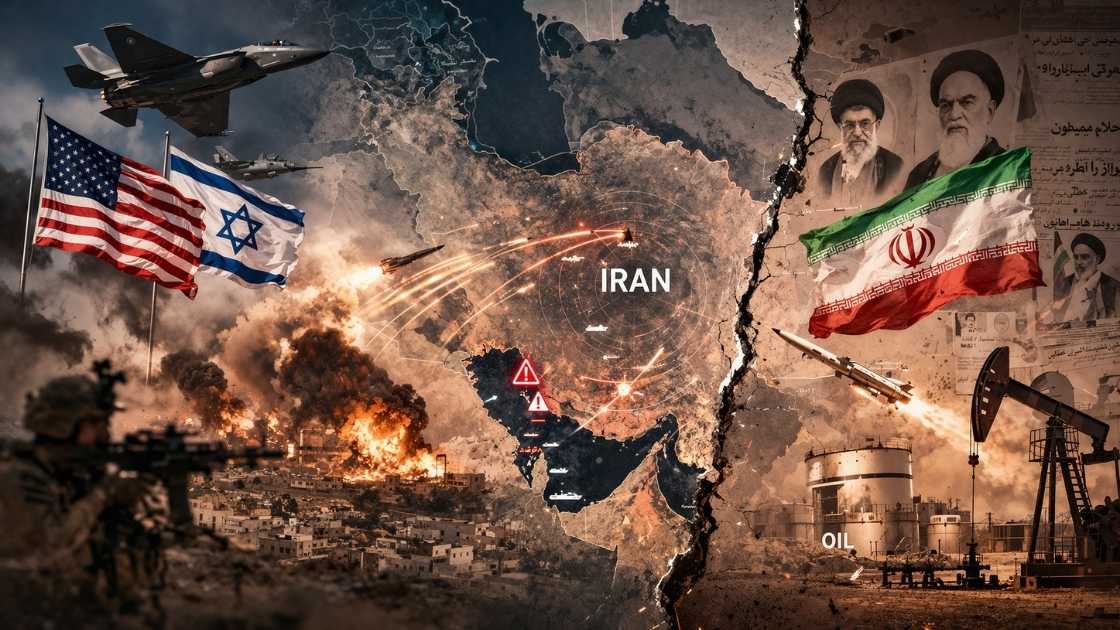
The ongoing conflict involving Iran, the United States and also Israel has once again sparked global debate, with comparisons being drawn to the controversial Iraq war. Ex-US counterterrorism official Joe Kent was very critical of the military strikes and implied that things might be unfolding along a familiar and worrying pattern.
Kent, who has recently left his job, worried that the conflict may not have been started by an immediate threat. According to what he said, there was no definite piece of intelligence showing that Iran presented an immediate danger when the attacks were launched.
This has raised serious questions about whether the current escalation is based on strategic necessity or political pressure.
Growing Tensions Across the Middle East
The conflict started with coordinated attacks by the US and Israel on Iranian sites earlier this year. After that, things have spiraled out of control with fight-backs, missile attacks and the whole area becoming less and less safe.
Recent developments indicate that things are getting worse instead of being stabilized. Iran has launched missiles as a counterstrike. Also, Israeli and US forces are still carrying out operations which mainly target the destruction of the main infrastructure and military positions.
The ripple effects are being felt across multiple countries, including Iraq, Lebanon and Gulf nations, raising fears of a wider regional war.
Joe Kent’s Key Concerns
Joe Kent has highlighted several critical issues regarding the conflict:
- He claimed that the war appeared “inevitable” within internal discussions, with limited room for debate.
- He suggested that the justification for military action may not have been strong enough.
- He warned that the situation could mirror the Iraq war, where initial claims later faced heavy criticism.
Kent’s resignation itself has become a major talking point, signaling internal disagreement within US leadership over the direction of foreign policy.
Escalation and Global Impact
Besides that, energy centers being targeted have caused worldwide markets to be shaken, resulting in oil prices going up and a sense of uncertainty being created in overseas trade.
Moreover, the well-known for its strategic value era Hormuz Strait, through which a major portion of the world’s oil passes, has turned into a source of conflict that risks extending even to the international level.
The strategic Strait of Hormuz, a critical route for global oil supply, has also become a focal point of tension, further increasing the stakes for the international community.
Is History Repeating Itself?
The comparison to the Iraq war is not being made lightly. Critics argue that entering another prolonged conflict in the Middle East without clear evidence or long-term planning could have serious consequences.
Just like during the early 2000s, there are worries about the reliability of the intelligence, the role of politics and the consequences of continuing military action.
Supporters of the military strikes believe they are a must to ensure security but, those who question, think that dangers could be greater than good.
Conclusion
The Iran conflict is still unfolding and there is no definite end to it yet. Joe Kent’s comments have changed the discussion in a significant way, making both the decision makers and the public rethink the reasons for the war as well as the possible results.
As the situation develops and the tensions escalate, the whole world is watching with bated breath. This conflict may turn into another long lasting tragedy or itletspurs diplomatic move, no one knows yet. However, the only clear fact at the moment is the game is on and the price is enormous.