Educational Resource: Understanding MRI Images
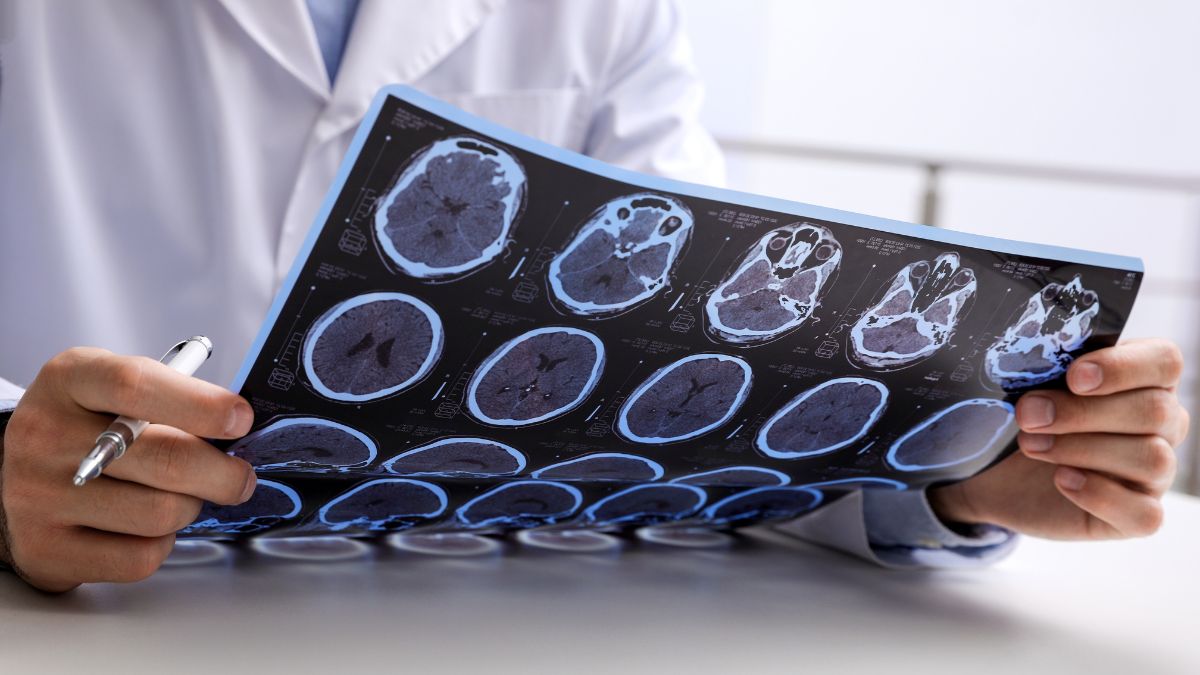
“This article gives you the tools you need to better understand your MRI images. We talk about the basics of how MRI works, what the different shades signify, and how we use this information to help you get better.”
Getting an MRI can be a lot to handle, and looking at the pictures afterward might make you even more confused. We at SoCal Imaging and Open MRI your trusted imaging center in Glendale think that giving our patients information is important. We want you to be at ease and know what’s going on every step of the procedure even when you get the findings of your MRI scan. Let us work together to make sense of those confusing pictures.
What is an MRI, Anyway?
Magnetic Resonance Imaging (MRI) is a method of medical imaging that does not require going inside the body. It uses strong magnets and radio waves to take highly good pictures of organs, soft tissues, bones and practically all other components of the body that are within. An MRI does not employ ionizing radiation like X-rays or CT scans do. This makes it a highly safe choice especially if you need to have pictures taken often. Our advanced imaging center Glendale CA utilizes cutting-edge technology to provide these precise images.
The Magic of Magnets and Radio Waves
How do we get these images? Your body is mostly water and water molecules contain hydrogen atoms. These hydrogen atoms have tiny magnetic properties. When you lie inside the MRI scanner, the strong magnetic field causes these hydrogen atoms to align. Then, brief pulses of radio waves are sent, temporarily knocking these atoms out of alignment. When the radio waves turn off, the hydrogen atoms quickly relax back into alignment, releasing energy.
Decoding the Shades: T1 and T2 Weighted Images
The importance of early detection when you look at MRI images you will often hear terms like T1 weighted and T2 weighted. These refer to different ways we capture the energy released by the hydrogen atoms. Think of them as different filters that highlight specific tissues or abnormalities.
T1-weighted images: These images are excellent for showing anatomical details. On T1 images, fat appears bright while water rich tissues and fluids (like cerebrospinal fluid and cysts or inflammation) appear darker (grey to black). They provide a good overall view of the structures.
T2-weighted images: These are typically very sensitive to water and inflammation. On T2 images, water rich tissues and fluids appear bright while fat can also appear bright. This makes T2 images particularly useful for detecting inflammation swelling tumors and other fluid-filled abnormalities.
FLAIR (Fluid Attenuated Inversion Recovery) images: This modified T2 sequence suppresses normal cerebrospinal fluid signal to dark. This reveals brain and spinal cord abnormalities that a T2 image’s strong CSF signal would hide. It detects multiple sclerosis well.
STIR (Short Tau Inversion Recovery) images: This sequence blocks the signal from fat, which makes it look dark. It works very well for finding bone marrow edema swelling inside the bone hidden fractures fractures that are not easy to identify on X-rays and other situations where fluid in fatty tissues has to be made more visible.
What Do Different Colors (Signal Intensities) Mean?
MRI images display different shades of grey, white and black which we call signal intensity.
Bright (High Signal Intensity): This often indicates tissues with a high water or fat content, or areas where contrast dye has accumulated. On T2-weighted images, bright areas can suggest inflammation, edema swelling cysts or certain types of tumors.
Dark (Low Signal Intensity): This usually means areas with less water or fat, or dense structures. Bones (cortical bone), air, and certain types of calcifications often appear dark. On T1-weighted images, dark areas can indicate fluid, while on T2-weighted images, very dark areas might indicate old blood products or certain fibrous tissues.
Intermediate (Grey Signal Intensity): Most normal soft tissues, like muscles and organs, typically appear in various shades of grey.
The Importance of Contrast Material
During an MRI we sometimes utilize a contrast agent that is usually injected into the veins and contains gadolinium. This chemical makes some tissues, blood arteries, inflammation and malignancies easier to see. It helps us see little changes that might not be visible in photos without contrast, which gives us clearer diagnostic information. We always carefully assess if contrast is necessary for your specific scan. When you get an MRI in Glendale CA at our facility we prioritize your safety and comfort during this process.
How We Interpret Your Images?
Interpreting MRI images is a complex process. Our board-certified radiologists systematically review every image, considering various factors such as tissue contrast, abnormalities, and patient history to provide an accurate diagnosis. What to expect during your first visit to a Glendale imaging center, includes understanding this process. You’ll be guided through the procedure, from check-in and safety screening to the actual MRI scan and post-scan consultation.
Anatomy: Is the basic structure normal? Are there any obvious shifts or distortions?
Signal Changes: Are there any areas of abnormal brightness or darkness?
Location: Where exactly are the changes located? Does this correlate with your symptoms?
Size and Shape: What are the dimensions and characteristics of any abnormalities?
Comparison with Previous Scans: If you have prior MRI scans, we compare them to look for changes over time.
Your Role in the Process
While our experts interpret the images, your role is crucial. Feel free to ask the questions we always encourage you to discuss your scan with your referring physician. They will explain the findings in relation to your overall health and treatment plan. At our Glendale imaging center Glendale CA, we believe open communication is vital.
Conclusion
It can be hard to understand the MRI scans but if you know the basics it gets easier. We hope that this will be helpful resource that makes you feel more at ease and knowledgeable about your MRI scan. Our team is always here to help you with your health journey by giving you accurate images and caring for you.